 By
By

Specialists in Nigeria are warning that diabetes has become one of the country’s biggest drivers of limb loss, with senior clinicians saying the disease now accounts for about 60% of leg and foot amputations. In reporting published by PUNCH Healthwise on April 5, 2026, experts linked the trend to poorly managed diabetes, late diagnosis, delayed hospital presentation, inadequate foot care, and low public awareness of early warning signs.
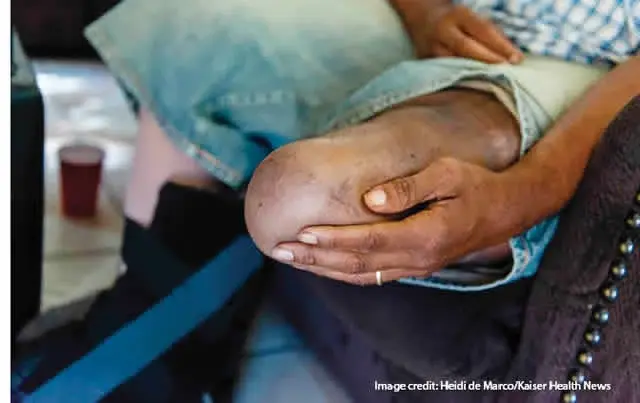
According to the report, the concern centres on complications such as foot ulcers, infection, gangrene, nerve damage, and poor blood flow, which can progress to irreversible tissue damage when patients do not receive timely treatment. The article says specialists believe these diabetes-related amputations may now exceed trauma-related amputations in some treatment settings.
Professor Mike Ogirima, an orthopaedic surgeon and former president of the Nigerian Medical Association, told PUNCH Healthwise that while Nigeria does not have a single national amputation database, diabetes-related amputation is now extremely common and, in his own centre, has become the number one cause of amputation. He said the lower limbs, especially the feet, are most frequently affected, reflecting the combined impact of diabetic neuropathy and impaired blood supply.
The article also quotes Professor Olufemi Fasanmade, a professor of endocrinology at Lagos University Teaching Hospital, who said that although national data collection remains weak, diabetes is responsible for roughly 60% of leg or foot amputations in Nigeria. He added that, in many teaching hospitals, at least one or two feet are amputated each week due to diabetes, and that diabetic gangrene remains a regular cause of admission.
For IMEA CPO readers, the significance of the report goes beyond the headline figure. It reinforces how strongly the Nigerian market is being shaped not only by trauma and injury, but by diabetic foot disease and chronic disease complications. In practical terms, that means growing importance for prevention-led pathways such as screening, protective footwear, custom insoles, orthotic offloading, earlier wound referral, and stronger patient education around foot inspection and glucose control. This is an inference from the clinical drivers described in the report.
The experts interviewed by PUNCH Healthwise pointed repeatedly to delayed care as a major problem. Ogirima said patients often present late, sometimes after seeking help from traditional healers or after delaying consent for surgical intervention even when the limb has become gangrenous. Fasanmade similarly stressed that prevention depends on good diabetes control, appropriate footwear, regular foot checks, and avoiding barefoot walking or tight shoes.
That combination of late presentation and limited preventive behaviour is especially important in O&P and rehabilitation terms. Once ulceration and infection advance, the clinical pathway can move rapidly from limb preservation to partial foot or major lower-limb amputation. In cost-sensitive systems, the downstream consequences are substantial: greater rehabilitation need, more demand for prosthetic services, more mobility support requirements, and a heavier social and economic burden on families. This is an inference, but it follows directly from the complications described by the specialists.
The article also underlines a wider systems challenge in Nigeria: the absence of robust national data. Both specialists noted that available numbers are often centre-based rather than national, which makes it harder to quantify the true scale of diabetes-related limb loss across the country. Even so, the consistency of their observations suggests that diabetic foot complications are already a major and visible burden in tertiary care.
Why this matters
For Nigeria’s rehabilitation and O&P sector, the message is clear. Diabetes is no longer only an endocrine or internal medicine issue. It is increasingly a limb-loss and rehabilitation issue as well. The stronger opportunity now is not only in prosthetic response after amputation, but in building earlier diabetic foot pathways that reduce avoidable limb loss before it happens. That includes education, screening, offloading, wound management, and practical lower-limb protection strategies. This conclusion is an inference based on the clinical picture described in the report.