 By
By
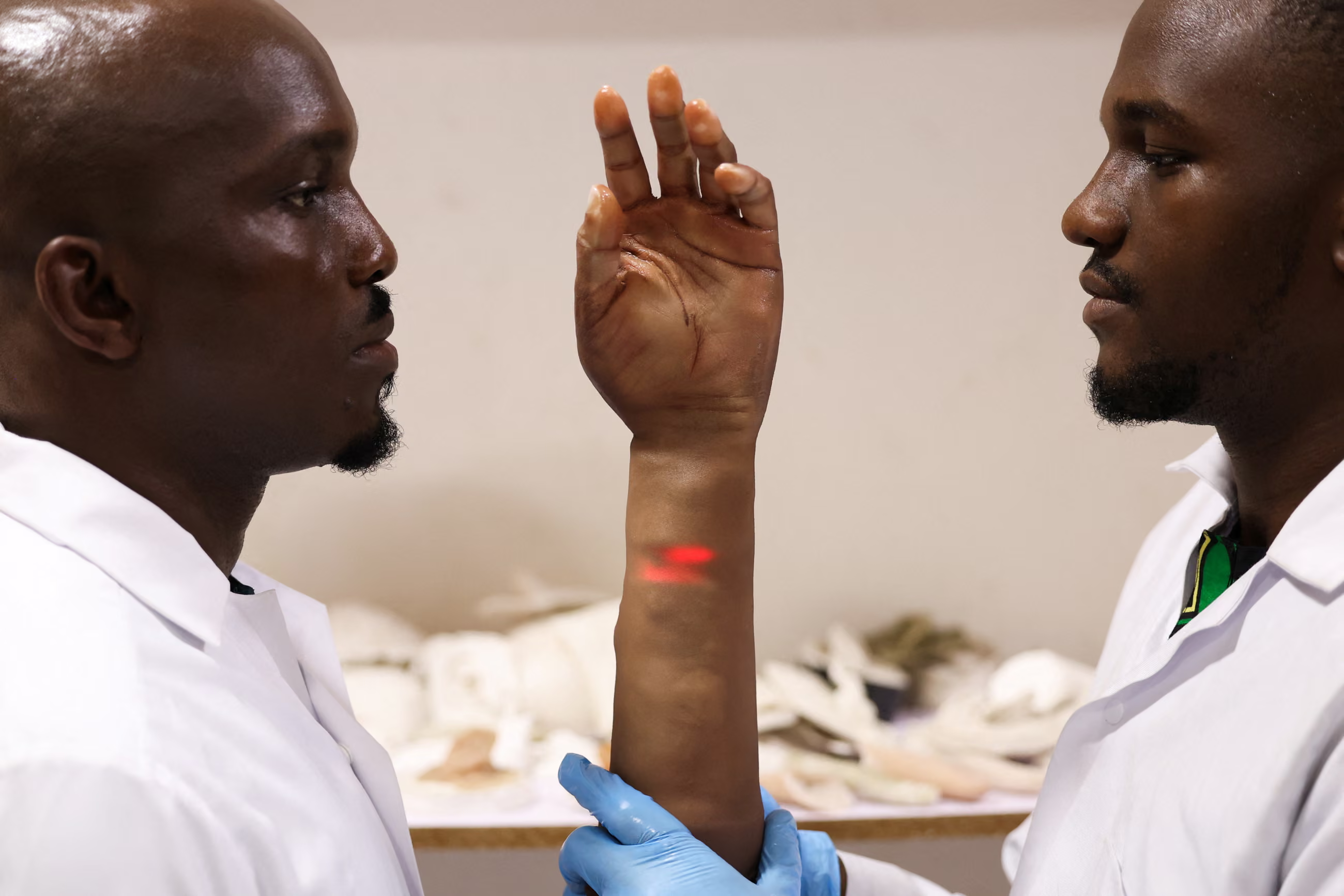
A new report in The Guardian has shone a spotlight on two Nigerian brothers whose work is challenging one of the most persistent problems in global prosthetics: devices are too often designed, manufactured, and priced far away from the people who need them most.
The article follows John and Ubokobong Amanam of Immortal Cosmetic Art in Uyo, Nigeria, whose prosthetic work grew from a personal injury into a wider mission to create more realistic and more relevant artificial limbs for African users.
The story begins with Ubokobong Amanam’s own experience after losing fingers in a fireworks accident. According to the report, the prosthetics available to him at the time were poorly matched in appearance and poorly suited to his context, pushing the brothers toward an obvious but under-addressed question: why were realistic prosthetics for Black African users so difficult to find? John Amanam’s background in special effects and body replication then became the starting point for a prosthetic business built around local design and visual realism.
What makes the story especially important for the O&P sector is that it is not only about appearance. The Guardian says the brothers’ company has already produced more than 5,000 products and is moving beyond static cosmetic limbs into electromyography-driven bionic arms. Reuters separately reported in August 2025 that Immortal Cosmetic Art had developed the Ubokobong Bionic Arm, a hyper-realistic functional prosthesis designed around Black skin tones and muscle-signal control.
The article also points to a much bigger access problem. The World Health Organization says more than 2.5 billion people globally need at least one assistive product, and that access in some settings can be as low as 3%. WHO also notes that prostheses and other assistive products are essential not only for mobility and independence, but for education, employment, participation, and dignity. In that context, the Amanams’ work is part of a much broader challenge around affordability, availability, and design relevance.
That broader challenge is particularly severe in low- and middle-income settings. WHO’s assistive technology guidance says many people still lack access because of high cost, limited financing, weak supply chains, low awareness, and shortages of trained personnel. These barriers help explain why prosthetics can remain inaccessible even where need is obvious and why local manufacturing is becoming more strategically important.
For IMEA CPO readers, one of the strongest themes in the story is context-appropriate design. Prosthetic systems built primarily for wealthier markets may not always reflect the realities of climate, work patterns, terrain, maintenance access, or cultural expectations in African settings. The Guardian article explicitly frames the Amanam brothers’ work as a response to imported prosthetics that often did not fit local users well, while experts quoted in the story argue that community-based innovation can make assistive technology more accessible, sustainable, and relevant.
This matters because prosthetic access is not just a manufacturing issue. It is also a design, policy, and systems issue. WHO has repeatedly argued that assistive technology should be treated as a core part of health and social systems rather than an optional extra, and that stronger international cooperation and workforce capacity are essential to closing the access gap. When local innovators step into that gap, they are not simply making products; they are exposing the weaknesses of the wider system around them.
The Amanam brothers’ work also raises an important commercial point for the global O&P industry. If locally developed prosthetics can combine better cultural fit, strong aesthetics, and improving function at lower cost than many imported options, then innovation may increasingly flow from emerging markets outward rather than the other way around. Reuters reported that the company had already attracted international attention and orders beyond Nigeria, while The Guardian said demand now includes customers in other African countries and the diaspora.
For the African rehabilitation sector, that could be significant. Locally rooted prosthetic development has the potential to shorten feedback loops between users, clinicians, and makers; reduce dependence on imported repairs and parts; and encourage products designed for actual daily use rather than assumed use. That is an inference, but it is well supported by the article’s emphasis on local realities and by WHO’s wider analysis of why assistive technology access remains weak in many countries.
Ultimately, this is a story about more than two brothers and one company. It is about what happens when prosthetic design starts with the lived experience of African users instead of treating them as an afterthought. For IMEA CPO readers, that makes the Amanams’ work worth watching not only as a human-interest story, but as a sign of where more relevant, more inclusive, and more regionally grounded prosthetic innovation may be heading.