 By
By

The global pediatric cranial remolding orthoses market is expected to expand steadily through 2034, reflecting growing awareness of infant cranial deformities, wider clinical adoption of non-surgical treatment pathways, and continued advances in customization and digital fitting technologies.
Recent market tracking pages published in March 2026 describe the sector as being driven by demand for orthotic solutions used to manage conditions such as plagiocephaly, brachycephaly, and scaphocephaly, with analysis commonly segmenting the market by active versus passive helmets and by application type.
One of the clearest themes across the current market outlook is the role of earlier diagnosis and stronger parental awareness. Public market summaries in 2026 describe increasing recognition of positional cranial deformities in infancy as one of the strongest growth drivers for the category, alongside greater pediatric recommendation of orthotic intervention. A widely circulated March 2026 market summary cited by several industry pages says the market is benefiting from rising physician endorsement, demand for customized devices, and broader uptake of early screening.
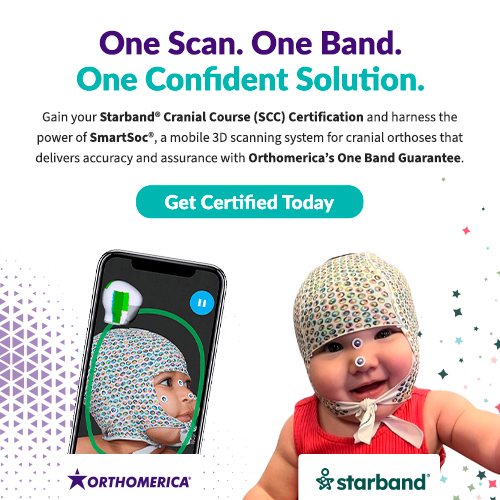
Technology is another major factor shaping the market. Current market write-ups repeatedly highlight growing use of 3D scanning, digital customization, adjustable designs, and lighter materials to improve both fit and treatment experience. One 2026 market summary says 63% of healthcare facilities in its surveyed context are using advanced 3D scanning technologies, while another identifies 3D printing as one of the fastest-growing technology segments because it can improve customization and potentially reduce production costs. These figures come from market-research pages rather than peer-reviewed clinical studies, so they should be treated as commercial market estimates rather than independently validated clinical benchmarks.
The market also appears to be benefiting from the continued shift toward non-invasive infant care solutions. Pediatric cranial remolding orthoses are typically positioned as a conservative treatment option for skull shape asymmetry during early infancy, when cranial growth is still responsive to guided correction. Commercial market analyses published in 2025 and 2026 consistently frame this non-surgical treatment pathway as one of the main reasons the sector continues to attract interest from providers and families.
From a segmentation perspective, plagiocephaly continues to dominate the treatment landscape. A March 2026 market summary says plagiocephaly accounts for the largest application share, while brachycephaly remains another major category and scaphocephaly is also included in current market segmentation frameworks. The same sources suggest that customized helmet solutions remain central to current market demand, with tailored fit and comfort continuing to drive purchasing decisions.