 By
By
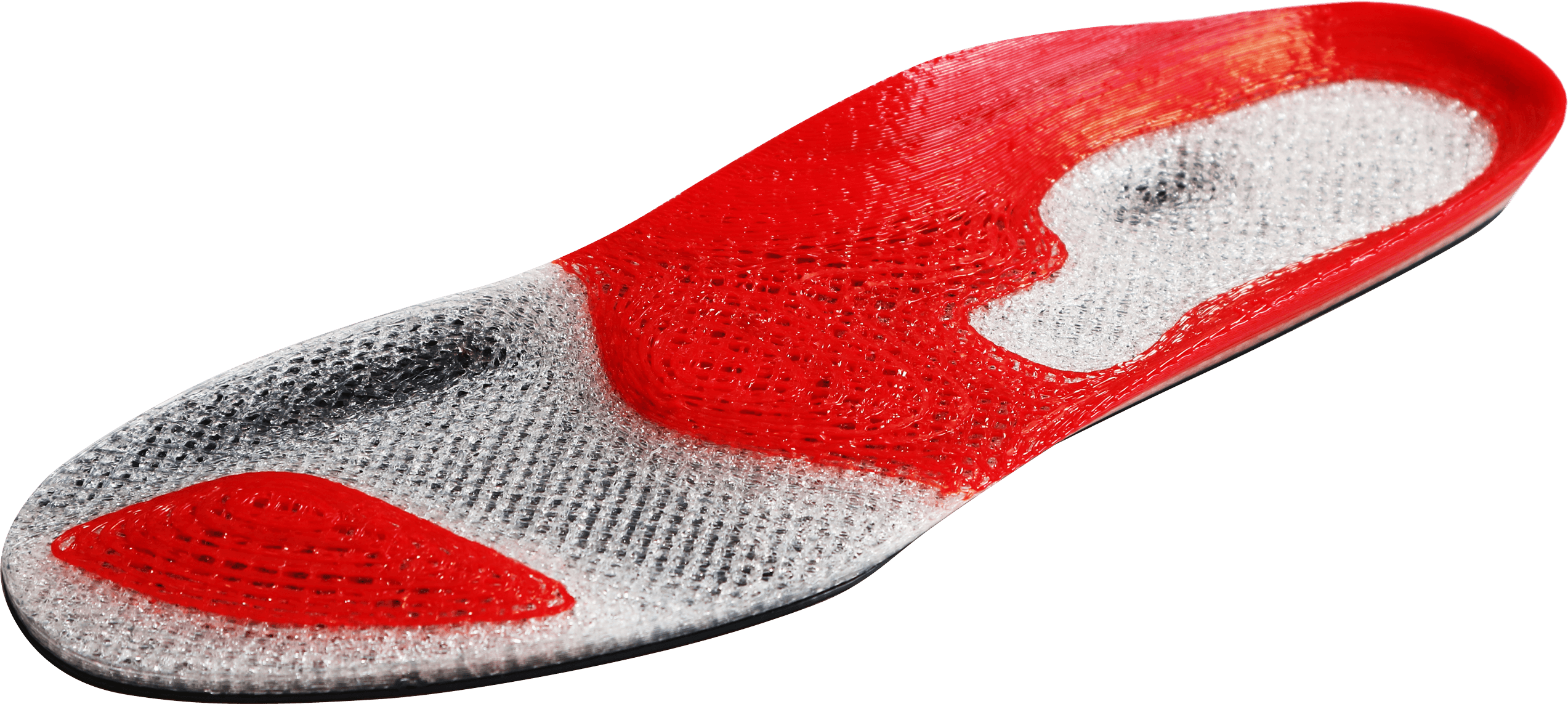
As digital orthotic fabrication becomes more widely adopted, clinicians and technicians are increasingly comparing 3D-printed TPU insoles with traditional EVA-milled insoles. Both materials have a place in modern foot orthotic care, but when it comes to surface wear resistance, TPU offers a clear advantage.
Thermoplastic polyurethane, or TPU, is valued for its flexibility, elasticity, impact resistance and abrasion resistance, making it suitable for applications where repeated loading and movement are expected. In orthotic applications, this makes TPU particularly interesting for 3D-printed insoles that need to combine durability, comfort and patient-specific support.
Why TPU Performs Well in Wear Resistance
One of the strongest arguments for TPU in 3D-printed insoles is its resistance to abrasion. In practical terms, this means the insole surface is less likely to break down, crumble or wear away quickly under repeated foot movement.
Abrasion testing methods such as the Martindale test are commonly used to evaluate how materials respond to repeated rubbing and wear under controlled conditions. The test is designed to simulate real-world surface wear by rubbing a sample against an abrasive surface and assessing visible deterioration over time.
For orthotic clinicians and technicians, this matters because insoles are exposed to constant friction inside footwear. A material with better abrasion resistance may retain its surface integrity for longer, especially in active users or in settings where replacement access is limited.
TPU Enables Tunable, Patient-Specific Support
The durability benefit of TPU is only part of the story. The larger clinical advantage is design control.
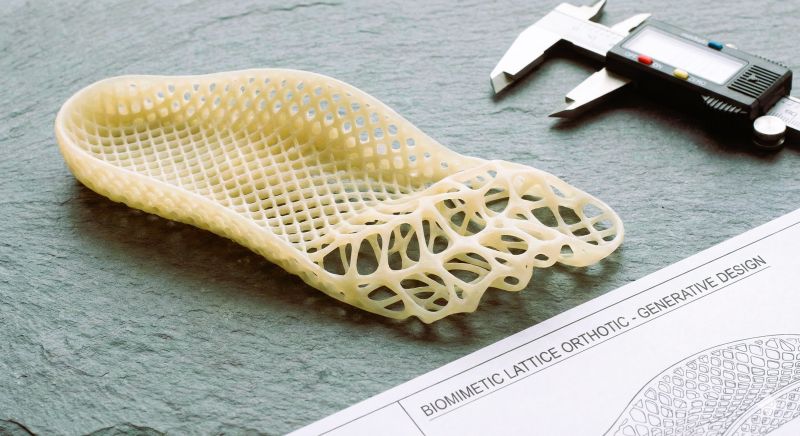
With 3D printing, TPU insoles can be produced with variable stiffness zones, lattice structures and targeted support areas. This allows clinicians to move beyond a single-density insole and instead design different regions for cushioning, arch support, heel control, forefoot offloading or pressure redistribution.
This is one of the reasons 3D-printed orthotic workflows are attracting interest. Recent clinical literature has explored 3D-printed insoles using materials including EVA, PLA and TPU, reflecting growing interest in printed orthoses as an alternative or complement to conventional fabrication.
EVA Still Has an Important Role
EVA remains one of the most familiar and widely used materials in foot orthotic production. It is lightweight, comfortable, easy to mill, easy to modify and available in multiple densities. For many clinics, EVA remains a practical material for routine custom insoles, accommodative devices and fast in-house production.
However, EVA foam can compress and lose shape over time. This is especially relevant in high-load areas such as the heel, metatarsal heads and medial arch. Once EVA collapses, the original contour and support profile may be reduced, which can affect comfort, offloading and clinical function.
Compression Still Determines Replacement Timing
Although TPU performs strongly in wear resistance, both TPU and EVA insoles are still subject to long-term changes under repeated loading.
The difference is how they tend to age. EVA foam can permanently compress as the foam structure collapses. TPU, especially when printed with an open or lattice structure, may settle gradually as the structure adapts under repeated load.
This means that in real clinical practice, TPU and EVA insoles may still be replaced at similar intervals for some patients. The surface of a TPU insole may remain intact for longer, but replacement decisions are often driven by compression, loss of support, patient comfort, hygiene, footwear use and clinical goals.
What This Means for O&P and Podiatry Services
For orthotic and prosthetic clinicians, TPU should not be positioned simply as “longer lasting EVA.” It is better understood as a different material platform with different advantages.
TPU can offer:
- Strong wear resistance
- Digital repeatability
- Adjustable stiffness zones
- Lattice-based cushioning and support
- Reduced manual finishing in some workflows
- Consistent production from saved digital designs
- Opportunities for pressure-informed, patient-specific orthotic design
EVA can still offer:
- Familiar clinical handling
- Fast modification
- Comfortable accommodative support
- Simple milling workflows
- Lower technical barriers for many workshops
- Established use across routine orthotic care
The Clinical Takeaway
For clinics adopting digital orthotic production, 3D-printed TPU insoles offer an innovative and durable option, especially where wear resistance, design repeatability and tailored biomechanical support are priorities.
However, replacement cycles should still be based on clinical review rather than material claims alone. The key question is not only whether the insole surface remains intact, but whether the device continues to provide the intended support, comfort and function for the patient.
In that sense, TPU gives clinicians an important new tool. It does not eliminate the need for follow-up, reassessment or replacement, but it does open the door to more precise, data-driven and durable insole design.