

A photographic report from South Sudan has documented the patients, clinicians and technicians working together at Juba’s physical rehabilitation centre to restore mobility after conflict, disease and serious injury.
Published by The Guardian, the 15-image series was photographed by Kieran Seager for the International Committee of the Red Cross.
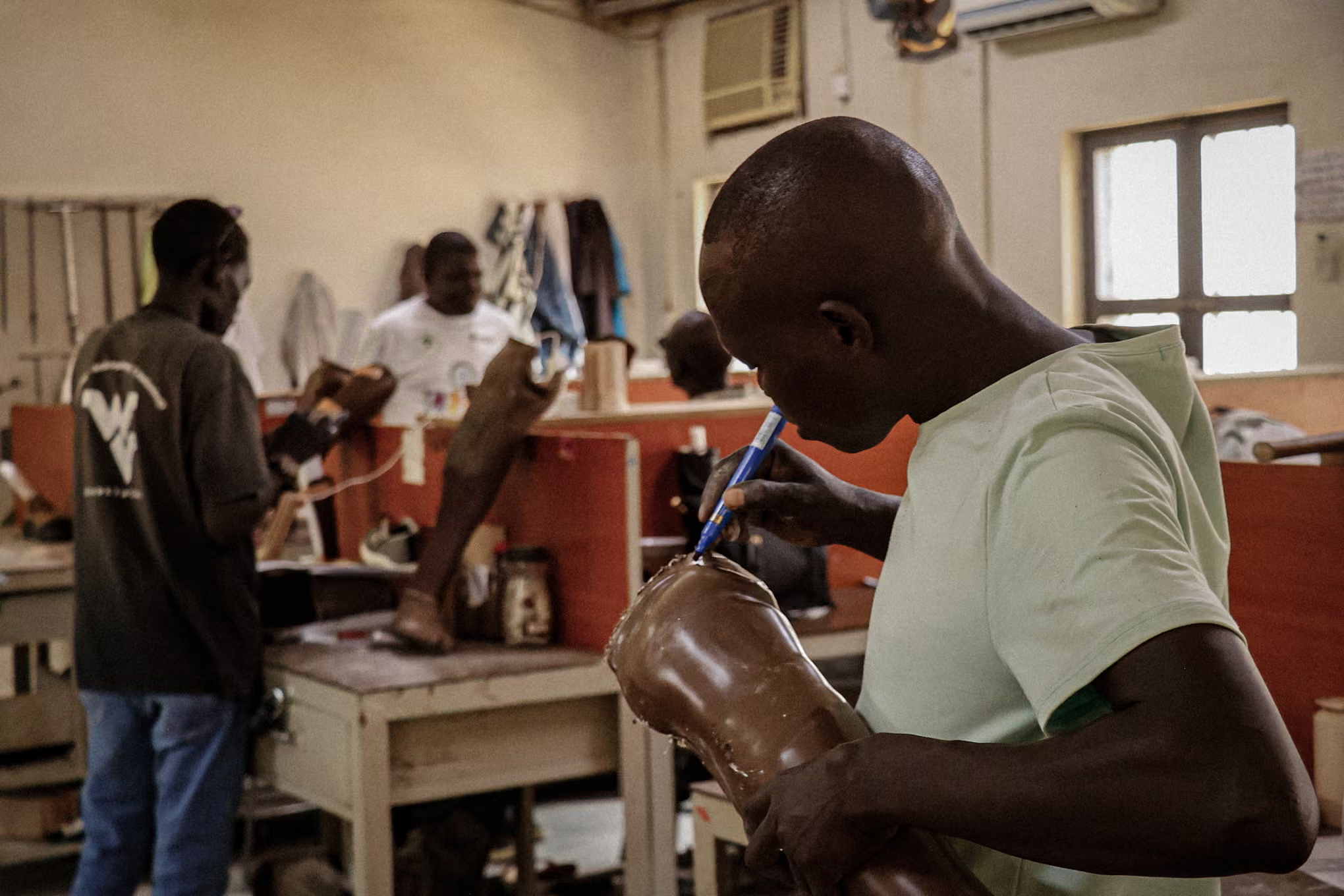
The report follows people receiving prosthetic limbs, orthoses and physiotherapy at the ICRC-supported centre in the South Sudanese capital. It also provides a rare view inside the workshop where technicians manufacture and repair devices under difficult conditions.
Many of the centre’s patients have experienced limb loss following gunshot wounds, landmine explosions and other conflict-related injuries. Others require rehabilitation because of polio, congenital conditions, snake bites or disease.
From former patient to member of staff
Among those photographed is Andreana Denya, who lost a leg after stepping on a landmine in 1988. She waited almost ten years before receiving her first prosthetic limb.
Denya now works in the kitchen at the same rehabilitation centre that supported her recovery.
She works alongside Susan Ide, a former social worker who contracted polio during infancy and has used lower-limb orthoses since childhood. Both women were previously patients at the centre.
Their employment illustrates an important outcome of physical rehabilitation: improved mobility can support education, employment and participation in family and community life.
A prosthesis or orthosis is not only intended to improve movement inside a clinic. Its value is ultimately determined by whether it enables the user to return to the activities that matter in everyday life.

Months of rehabilitation after amputation
The Guardian’s report also follows Puok Gatjor Puk, who was shot during a raid on his family’s cattle herd near his home in Leer County.
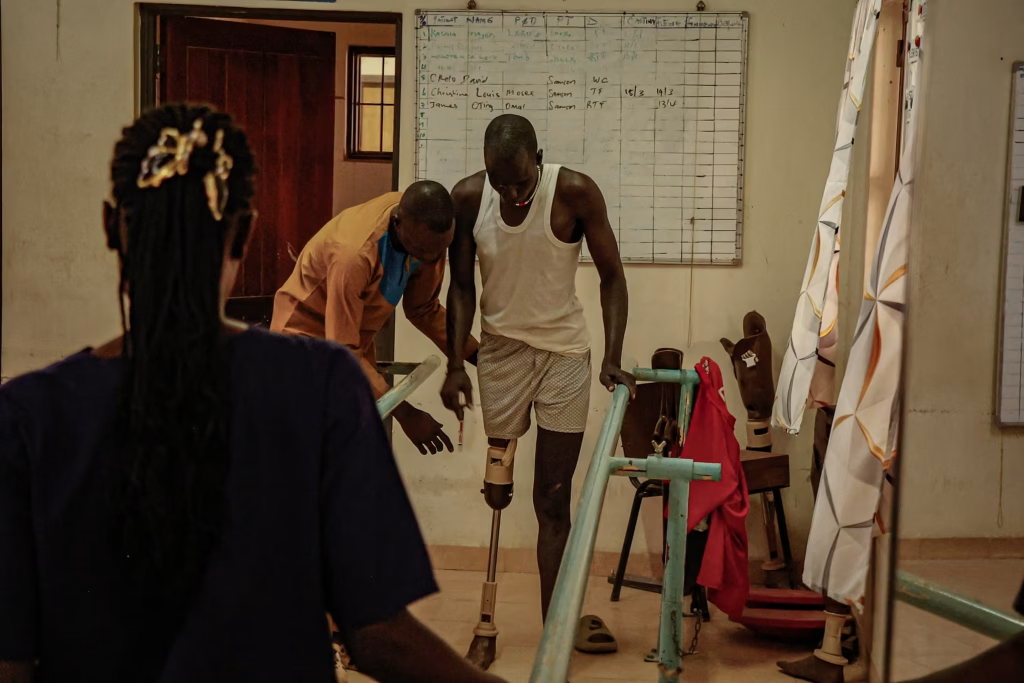
He was evacuated to Juba Military Hospital, but surgeons were unable to save his leg. After receiving a prosthesis, he began an inpatient rehabilitation programme involving gait training and physiotherapy.
Photographs show Puk practising between parallel bars and working with clinicians to rebuild strength, balance and confidence. Such training may continue for weeks or months, depending on the individual’s injuries, strength, general health and living environment.
Another patient, Idda Perry Stanley, is shown learning to stand and move using a walking frame after losing his leg. He had been attending the centre for more than a month.
Their experiences demonstrate why delivering a prosthetic limb alone is not sufficient. Patients may require wound management, residual-limb preparation, strengthening, balance training, gait education and repeated socket adjustments before they can use a device safely and independently.
Prostheses must withstand demanding lives
John Biliu, a farmer from Leer County, was shot in the leg during fighting in the late 1980s. He has since received several prosthetic limbs, each replaced after being worn down through continued use.
Following the death of his wife, Biliu became the sole provider for five children.
His experience highlights the importance of long-term access to repairs and replacement devices. Prostheses used for farming, walking long distances and travelling across uneven rural terrain face demanding conditions.
A device that performs adequately during clinical gait training must also withstand dust, heat, moisture, physical labour and limited access to maintenance.
For many users in South Sudan, the practical durability and repairability of a prosthesis may be as important as its initial weight or appearance.
Production inside the Juba workshop
The Juba centre contains a workshop where technicians manufacture prosthetic limbs, lower-limb orthoses, crutches and wheelchairs.
During the first six months of 2026, the workshop reportedly produced:
- 253 prosthetic devices
- 129 orthoses
- 1,083 walking aids
The photographs show technicians marking, shaping and assembling prosthetic components using established workshop processes.
Old prosthetic limbs and fabrication offcuts are also repurposed to produce crutches for new patients. This reflects the resource constraints facing the service, but also the technicians’ ability to extend the useful life of available materials.
Sustainable rehabilitation depends on more than obtaining finished components from overseas. Local workshops require dependable supplies of polypropylene, socket materials, joints, feet, fasteners, alignment components, consumables and repair tools.
They also need trained professionals who can assess patients, fabricate devices, resolve fitting problems and maintain equipment over time.
The ICRC has supported the education of South Sudanese technicians, including training undertaken in Tanzania and Cambodia.
Three ICRC-supported centres
The ICRC supports physical rehabilitation centres in Juba, Wau and Rumbek. These facilities provide prostheses, orthoses, wheelchairs, walking aids, physiotherapy and psychosocial support.
According to an ICRC programme overview, more than 3,700 people received services through the three centres during 2025. The programme delivered 751 prostheses and orthoses, 608 wheelchairs and 2,109 walking aids.
Since 2014, almost 40,000 people have accessed physical rehabilitation through the supported centres, according to the ICRC’s review marking South Sudan’s 15 years of independence.
Demand continues to grow as renewed fighting creates further traumatic injuries and people fleeing the conflict in neighbouring Sudan arrive in South Sudan requiring treatment.
Distance remains a major barrier
The Guardian photographs include the men’s inpatient dormitory at the Juba centre. Residential accommodation is necessary because some patients travel considerable distances from rural and conflict-affected areas.
Poor roads, seasonal flooding, insecurity and the cost of transport can make repeated outpatient appointments impossible. Patients may therefore remain at a centre while their device is fabricated, fitted and adjusted and while they complete an initial period of rehabilitation.
The ICRC has reported supporting transport, accommodation and meals to make treatment accessible to people coming from remote communities.
This logistical support is part of the rehabilitation pathway. A technically capable workshop cannot improve access if patients are unable to reach it or remain nearby long enough to complete fitting and training.
Restoring participation, not only mobility
The images from Juba show physical rehabilitation as a process involving surgery, workshop fabrication, clinical fitting, physiotherapy and social reintegration.
They also document continuity. Patients who arrived at the centre unable to walk have returned as workers, farmers and providers for their families.
South Sudan still faces a substantial gap between the number of people requiring rehabilitation and the limited availability of specialised services. Expanding access will require continued investment in local professionals, regional referral networks, workshop capacity and durable supply chains.
The Juba centre demonstrates what can be achieved when prosthetic and orthotic services are connected to physiotherapy, psychosocial care and practical support for patients travelling from distant communities.
- The Guardian: Learning to Walk Again at a South Sudan Clinic
- ICRC: Physical Rehabilitation in South Sudan
- ICRC: South Sudan at 15—Conflict, Resilience and Hope
- ICRC Audiovisual Archives: Physical Rehabilitation in Juba