

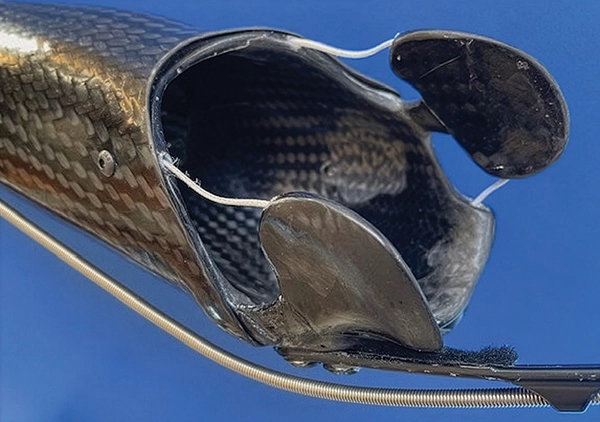
New research has taken an important step towards data-driven transradial socket design by identifying which relationships between a residual limb and its finished prosthetic socket can be predicted mathematically.
Researchers from the University of Toronto and Holland Bloorview Kids Rehabilitation Hospital studied digitised residual-limb and socket models from 14 people with transradial limb absence.
Their findings suggest that the overall dimensions of a socket can be predicted reasonably well from the size of the residual limb. However, the detailed geometry at the proximal and distal ends—where suspension, trimlines, tissue management and clearance become critical—remains much harder to automate.
The study, published in PLOS Digital Health, should therefore be understood as an early foundation for clinician-support software, not as a completed automatic socket-prescription system.
Turning clinical practice into measurable relationships
A prosthetic socket is not simply a larger or smaller copy of the residual limb.
During socket design, the prosthetist selectively modifies the captured anatomy to manage pressure, accommodate sensitive structures, stabilise the limb, provide suspension and preserve movement. These decisions are informed by tissue condition, scarring, limb shape, muscle activity, sensation, functional goals and the intended prosthetic components.
In conventional fabrication, this clinical reasoning may be expressed through casting technique and manual modification of a plaster model. In a digital workflow, the same decisions must be translated into software-based rectification.
That translation remains difficult because much of the prosthetist’s expertise is tactile, experience-based and specific to the individual patient.
The researchers asked whether part of this relationship could be described using simple linear regression—a transparent statistical approach that examines whether one measurement changes predictably in relation to another.
Fourteen limb–socket pairs studied
The study included 14 people who had lived with transradial limb absence for at least two years and were undergoing the design of a new socket.
Researchers created digital models of each participant’s residual limb and corresponding prosthetist-designed socket using a Vorum Spectra scanner.
The models were aligned using anatomical landmarks, a fiducial marker and a spline-based method intended to estimate how the limb was positioned inside the socket.
The researchers then compared several measurements.
Global descriptors included:
- Total volume
- Surface area
- Proximal-to-distal length
Cross-sectional measurements were taken at 25%, 50% and 75% of the limb and socket length. These included:
- Mediolateral width
- Anterior–posterior depth
- Circumference
- Cross-sectional area
A separate linear-regression model was created for each measurement, using the residual-limb value to predict the corresponding socket value. Leave-one-out cross-validation was used to test how each model performed when predicting a participant excluded from its training data.
Overall socket size was highly predictable
The strongest results were found in the global measurements.
Volume, surface area and overall length produced R² values between 0.94 and 0.97. Predicted R² values during cross-validation ranged from 0.92 to 0.97.
In practical terms, this means that participants with larger residual limbs generally received proportionally larger sockets. Much of the variation in overall socket scale could therefore be explained using relatively simple mathematical relationships.
This finding could eventually help digital systems establish a reliable initial socket envelope or identify designs that fall significantly outside expected proportions.
However, predicting overall size is not the same as creating a clinically acceptable socket. A socket can have the correct volume and length while still producing pain, instability, poor suspension or restricted movement.
Local geometry proved more difficult
Prediction became less consistent when the researchers examined individual cross-sections.
The strongest relationships were found around the middle of the socket, where geometry is more directly influenced by the general size and shape of the residual limb.
Performance weakened towards the distal and proximal regions.
At the proximal end, trimline position and supracondylar contouring may be deliberately modified to achieve suspension and stability while preserving elbow movement. These features reflect the clinician’s design strategy rather than simple anatomical scaling.
At the distal end, clearance, tissue condition, sensitivity, growth allowance and tapering can all affect the final geometry.
The reported mean absolute percentage error across the different measurements ranged from 2.5% to 13.6%.
The results provide a useful boundary for automation: software may be able to predict the broad socket form, but the most clinically sensitive regions require more information than basic limb dimensions.
What predictive design could contribute
If supported by larger datasets and clinical validation, predictive tools could potentially:
- Generate an initial socket design from a 3D residual-limb scan
- Recommend a range of established design options
- Compare a clinician’s design against expected geometric relationships
- Highlight unusual dimensions requiring review
- Reduce repetitive CAD work
- Support education in digital rectification
- Improve consistency between fabrication centres
- Help remote clinics work with regional digital-production hubs
- Preserve expert design knowledge within structured software
For O&P services across India, the Middle East and Africa, such tools could support hub-and-spoke manufacturing models. A trained clinician could assess and scan the patient locally, while digital design and fabrication are supported by a specialised regional centre.
The benefit would not come from removing the prosthetist. It would come from allowing the prosthetist to begin with a better-informed digital model and concentrate professional time on the patient-specific decisions that matter most.
Why this is not an automatic prescription system
The authors explicitly describe the equations as preliminary and exploratory. They are intended to explain broad geometric trends rather than generate clinically deployable sockets independently.
The sample contained only 14 participants treated at one hospital by two clinicians. The relationships may therefore reflect local clinical preferences, including the Northwestern-style three-quarter socket, particular trimline practices and preferred levels of distal clearance.
Important factors not fully represented by a simple geometric model include:
- Soft-tissue consistency
- Scarring and skin condition
- Sensation and pain
- Residual-limb maturity and volume fluctuation
- Age and growth
- Muscular control
- Suspension strategy
- Prosthetic component weight
- Occupational and functional requirements
- Clinician-specific design philosophy
The study also notes that paediatric users may require additional distal clearance for growth, while age-related differences in tissue consistency may influence local rectification.
Larger studies involving multiple clinics, prosthetists, socket designs and patient populations will be required before predictive relationships can be generalised.
Relevance for IMEA CPO education
The findings may be particularly valuable as a teaching framework.
They provide a quantitative way to distinguish between socket features that broadly follow residual-limb dimensions and features created through clinical intent.
For students and clinicians learning digital socket design, this distinction is essential. Software can scale geometry, calculate dimensions and reproduce stored modifications, but it does not automatically understand why a trimline is placed at a particular level or why one patient requires more relief than another.
Future systems may combine geometric models with age, tissue characteristics, clinical measurements, pressure data and functional objectives. Rather than producing one supposedly perfect design, they may offer several candidate sockets for a prosthetist to evaluate and refine.
Automating the predictable, preserving clinical judgement
This research offers a balanced view of digital automation.
The broad dimensions of a transradial socket appear sufficiently predictable to support future design-assistance tools. The areas most closely associated with suspension, distal comfort and individual clinical strategy remain considerably more complex.
That is not a failure of the technology. It is useful evidence about where automation can add value and where the CPO’s expertise remains indispensable.
The future of predictive socket design is therefore unlikely to be a button that replaces the prosthetist. It is more likely to be an interpretable clinical tool that automates predictable scaling, highlights unusual geometry and enables the prosthetist to focus on fit, function and the individual user.
- Bioengineer.org: Simple Regression Models Bring Predictive Socket Design Closer
- PLOS Digital Health: Toward Predictive Prosthetic Socket Modeling
- Research Paper DOI
- Holland Bloorview Kids Rehabilitation Hospital
- University of Toronto Institute of Biomedical Engineering