 By
By
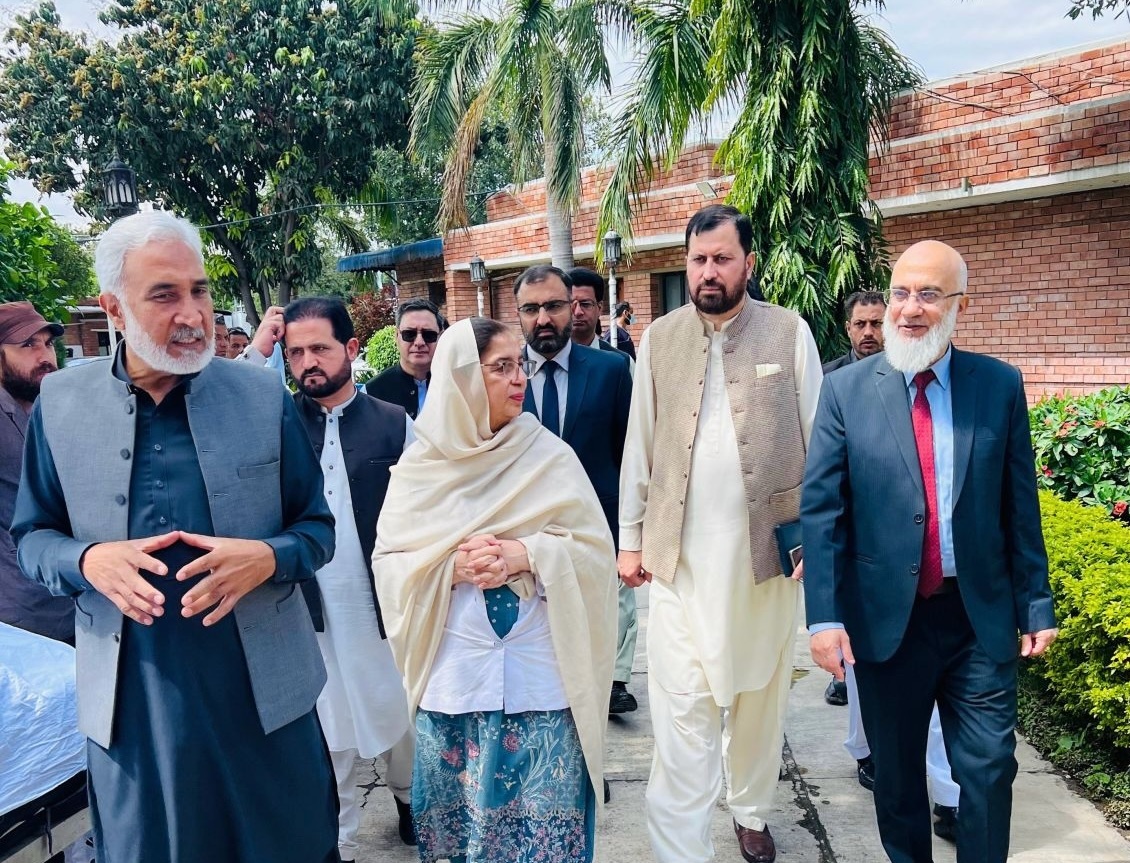
A high-level federal and provincial delegation has visited the Paraplegic Center Peshawar to assess the feasibility of establishing an Integrated Disability Complex for War-Affected Persons (IDCWAP) in the merged districts of Khyber Pakhtunkhwa.
The delegation included senior representatives from Pakistan’s Ministry of National Health Services, Regulation and Coordination, the Government of Khyber Pakhtunkhwa Health Department, AFIRM, NIRM, the Ministry of Interior, and WHO in Pakistan.
The visiting team was received by Dr. Syed Mohammad Ilyas, CEO of Paraplegic Center Peshawar, along with the Director Rehabilitation. During the visit, the delegation received a comprehensive briefing on the centre’s rehabilitation model, services, and infrastructure, with particular focus on its advanced approach to comprehensive physical rehabilitation.
According to the visit summary, delegates were taken through multiple departments and shown the centre’s facilities in detail. They also reviewed the assistive devices and rehabilitation products designed and manufactured at the institution, highlighting the centre’s combination of clinical care, technical capability, and locally delivered rehabilitation support.
For IMEA CPO readers, the significance of the visit lies in what it suggests about the role of Paraplegic Center Peshawar as a potential model for wider disability and rehabilitation planning in Pakistan. The centre already describes itself as an autonomous body under the umbrella of the KP Health Department, providing free comprehensive physical rehabilitation services including physiotherapy, occupational therapy, speech and language pathology, orthotic management, psychological counselling, and social support. (Paraplegic Center Peshawar)
That makes the feasibility discussion around an Integrated Disability Complex especially important. If developed, such a complex could help strengthen long-term rehabilitation and disability support for war-affected populations in areas that have experienced prolonged instability and service gaps. This is an inference from the purpose of the delegation visit and the institutions involved.
The visit also appears to reinforce Paraplegic Center Peshawar’s standing as a model institution for physical rehabilitation. During the tour, the centre was acknowledged for its advanced services and for the breadth of its rehabilitation and assistive-device work, underlining how local centres of excellence can help shape wider policy thinking around disability inclusion and post-conflict rehabilitation.
For the wider O&P and rehabilitation sector, the broader message is clear: large-scale disability planning works best when it is grounded in functioning service models. In that sense, the visit was not only about a possible future complex. It was also a recognition of the importance of established rehabilitation institutions that can demonstrate what integrated, multidisciplinary care looks like in practice.