

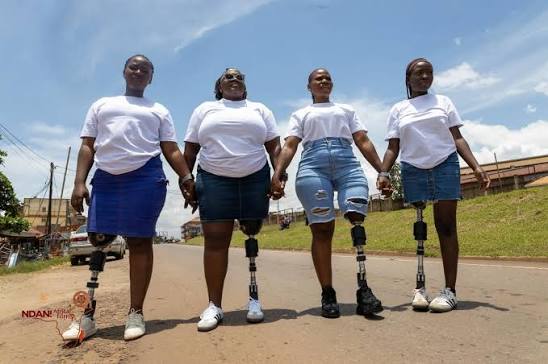
Providing a prosthesis can be a transformative stage in a person’s rehabilitation, but it does not by itself rebuild an education, career, relationship, identity or place within the community.
That wider reality formed the centre of Life Beyond Limb Loss: A Conversation on Rehabilitation, Inclusion & Resilience, an online discussion organised by Malcolm’s Anatomy Foundation.
The event brought lived experience together with professional knowledge to explore what happens after surgery, physical rehabilitation and prosthetic provision. Its central message was clear: limb loss is not the end of a person’s story, and successful rehabilitation cannot be measured only by whether someone receives an artificial limb or learns to walk with it.
Lived experience meets professional knowledge
The discussion featured Kangume Charlotte, an amputee advocate and co-founder of the Amputee Self-Help Network Uganda, alongside Esther Ugochi Friday, a prosthetist and orthotist.
Dr Mahlet Tamiru, a medical doctor and medical business developer, moderated the conversation.
Bringing these perspectives together allowed the speakers to examine rehabilitation from both sides of the clinical relationship. Professional expertise can explain assessment, prosthetic prescription, gait training and physical recovery. Lived experience reveals what it means to return home and negotiate daily life, social attitudes and personal expectations after formal treatment ends.
This intersection is essential. Clinical teams may see the delivery of a prosthesis as an important outcome, while the person receiving it may be thinking about returning to school, finding work, caring for children, using public transport or feeling comfortable in social settings.
Rehabilitation is bigger than mobility
The conversation highlighted several parts of life that can be overlooked when rehabilitation is discussed mainly in terms of surgery, wound healing and prosthetic technology.
A well-fitted prosthesis may improve mobility, independence and participation. Yet rebuilding life after limb loss can also involve:
- Adjusting emotionally to a changed body
- Rebuilding confidence and self-image
- Managing relationships and family expectations
- Returning to education or vocational training
- Finding or retaining employment
- Challenging stigma and discrimination
- Accessing sport, recreation and community life
- Developing practical strategies for daily activities
- Connecting with other people who have experienced limb loss
These outcomes are not secondary to rehabilitation. They are often the outcomes that matter most to the person.
Someone may achieve a technically good walking pattern but remain excluded from employment. Another person may use a wheelchair for much of the day yet participate fully in education, family and community life. Rehabilitation success should therefore be defined around individual goals and meaningful participation rather than one standard model of mobility.
Peer support provides something clinical care cannot
Charlotte’s participation reflected the importance of amputee-led organisations in filling gaps that formal health systems may struggle to address.
ASNU was established in Uganda by people with lived experience of amputation. Its work includes peer and psychosocial support, information about prosthetic services, education, retraining, sport and advocacy.
The organisation’s stated mission is to rehabilitate amputees holistically, using lived experience as a foundation for physical and emotional recovery. ASNU has also proposed an Amputees’ Ability Hub combining rehabilitation, vocational training and sports facilities.
Peer support can provide practical knowledge and emotional reassurance that differs from professional advice. An experienced amputee can discuss how to manage public reactions, navigate transport, return to work or cope with difficult days from a position of direct understanding.
That support can begin before prosthetic fitting and continue long after formal rehabilitation has ended.
A wider responsibility for P&O services
Prosthetists and orthotists cannot individually solve every social, economic or psychological challenge associated with limb loss. They can, however, help ensure that prosthetic care connects with the person’s wider rehabilitation goals.
This begins by asking questions beyond component selection:
- What does the person need or want to return to?
- Is the prosthesis suitable for the individual’s home, work and community environment?
- Are transport, maintenance and replacement costs sustainable?
- Does the person have access to physiotherapy and peer support?
- Are psychological or social-work referrals required?
- Could education, vocational training or workplace adaptation improve participation?
- Is the family receiving the information needed to support independence?
In many African settings, access to a prosthesis may already involve substantial travel and personal expense. Once a device has been delivered, limited access to repairs, follow-up appointments and replacement components can affect continued use. The wider rehabilitation plan must therefore consider long-term service access rather than treating delivery as the conclusion of care.
Building a continuing African conversation
Malcolm’s Anatomy Foundation says the event forms part of its work to create spaces for learning, advocacy and connection around limb loss and inclusion across Africa.
Such conversations can help shift the public narrative away from seeing amputees only through loss, charity or medical treatment. People with limb loss are students, parents, professionals, entrepreneurs, athletes and community leaders. Their ambitions extend far beyond receiving a device.
The full Life Beyond Limb Loss discussion is now available on YouTube.
Its most important question remains relevant for every rehabilitation programme: not simply whether a prosthesis has been delivered, but whether the person has been supported to return to the life they value.
- Watch Life Beyond Limb Loss on YouTube
- Malcolm’s Anatomy Foundation
- Malcolm’s Anatomy Foundation Support Programmes
- Amputee Self-Help Network Uganda
- ASNU: Who We Are
- ASNU Amputees’ Ability Hub