 By
By
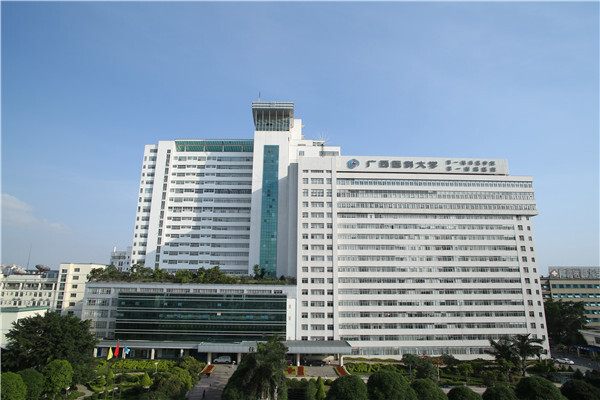
A hospital in southern China has trialled an integrated rehabilitation system that combines a brain-computer interface (BCI), spinal cord electrical stimulation, and a robotic exoskeleton to support stroke recovery, offering a glimpse of how neurotechnology is beginning to move from laboratory research into real-world rehabilitation settings. Xinhua reported that the system was deployed at the First Affiliated Hospital of Guangxi Medical University in Nanning and used with a 48-year-old stroke survivor who had been left with dense hemiplegia and severe spastic paralysis after a major stroke in late 2024.
According to the report, the rehabilitation session worked by using an electrode cap to detect the patient’s intention to move, while spinal stimulation helped reduce spasticity and reopen movement pathways, and the exoskeleton translated those signals into assisted stepping. Xinhua described the case as the first deployment in Guangxi Zhuang Autonomous Region of a fully integrated “mind-driven” rehabilitation system of this kind for stroke recovery.
What makes the case notable is not just the robotics. It is the attempt to create a closed-loop rehabilitation system in which intention, stimulation, mechanical assistance, and feedback are all linked together. In the words of the treating team cited by Xinhua, the system acts as a digital bridge between thought and physical movement, allowing the patient to remain an active participant in therapy rather than a passive recipient of manipulation. After two weeks of intensive training, the report said the patient was able to voluntarily lift his arm and flex his knee.
For IMEA CPO readers, the significance lies in the wider direction of travel. This is not a prosthetics story directly, but it is highly relevant to the broader future of rehabilitation technology, human-machine interfaces, and robot-assisted recovery. Systems that combine neural intent detection with powered physical assistance may eventually influence stroke rehabilitation, spinal cord injury recovery, and parts of the assistive-device sector more broadly. That is an inference, but it is well supported by the way the Guangxi team describes the system and by the broader BCI push now underway in China.
The article also places the case inside a much bigger national trend. Xinhua reported that 2025 was widely seen as a breakout year for BCI in China, with new clinics and dedicated wards opening, and noted that China’s National Healthcare Security Administration issued a pricing guideline for neural system care services in 2025 that recognized BCIs as an independent category. Xinhua also said China’s National Medical Products Administration approved an implantable BCI device this year for patients with tetraplegia caused by cervical spinal cord injuries, marking a further step toward real-world deployment.
That acceleration is being driven by clinical need as much as by technology ambition. China has one of the heaviest stroke burdens in the world. A recent peer-reviewed China Stroke Prevention and Control Report estimated that 26.34 million people were living with stroke in China in 2021, while another national stroke surveillance report placed the 2021 prevalence at 28.76 million. Xinhua’s figure of around 26.7 million stroke patients therefore sits within the same broad range and reflects the scale of the country’s rehabilitation challenge.
That burden helps explain why stroke rehabilitation, rather than only spinal cord injury, is becoming a major focus for Chinese BCI development. Xinhua quoted the treating neurosurgeon, Feng Daqin, saying the clinical need in stroke is far larger and more urgent than in spinal cord injury alone. The report also suggested that the Chinese approach differs somewhat from much Western BCI work by putting more emphasis on non-invasive or minimally invasive systems, prioritizing safety and broader accessibility over maximum signal precision.
For rehabilitation providers, that distinction matters. Fully invasive BCIs may offer greater precision, but they also require neurosurgical implantation and carry higher barriers to widespread use. By contrast, a non-invasive cap-based system paired with stimulation and a robotic exoskeleton may prove easier to integrate into rehabilitation pathways if it can deliver adequate functional results. This is an inference, but it follows directly from the trade-off described in the Xinhua report.
The Guangxi team is already looking beyond stroke. Xinhua said the hospital is exploring possible future use of BCI technology in other neurological disorders, including Parkinson’s disease, and sees the platform as a possible area for wider medical cooperation with ASEAN countries, given Guangxi’s role as China’s southern gateway. That does not mean export or adoption is imminent, but it does suggest the hospital sees the system as more than a single local case.
Why this matters
The most important takeaway is that China is now showing how BCI, electrical stimulation, and powered exoskeletons can be linked into a practical rehabilitation workflow for stroke, not just a research demonstration. The technology is still early, and one case does not prove broad clinical effectiveness. But it points toward a future in which rehabilitation may become more intent-driven, more interactive, and more closely integrated with advanced assistive systems. For IMEA CPO readers, that makes it a development worth watching closely.