 By
By
International Women’s Day is an opportunity to reflect on progress toward gender equality across healthcare professions, including the field of Orthotics & Prosthetics (O&P). While the O&P profession is growing worldwide, it remains male-dominated in many countries, particularly across the India–Middle East–Africa (IMEA) region, where the shortage of trained clinicians is already a major challenge. Increasing the number of women working as prosthetists, orthotists, technicians, and rehabilitation specialists is not only a matter of equality — it is essential for improving patient care.
A Male-Dominated Profession, But Changing Slowly
Studies from different countries show that women are still under-represented in the O&P workforce.
In South Africa, for example, only about 27% of prosthetists/orthotists are female, compared to 73% male.
In the United States, women historically represented around 20% of certified practitioners, although the number has been increasing over time.
More recent workforce data also shows that prosthetics remains more male-dominated than orthotics, with women making up roughly 25% of prosthetic practitioners but close to 50% in orthotics in some surveys.
These trends are also seen in many IMEA countries, where access to education, cultural expectations, and limited training opportunities have historically reduced the number of women entering technical rehabilitation professions.
Why Female CPOs Matter for Patients
Having women in prosthetic and orthotic teams is not only about representation — it directly affects the quality of care.
O&P is a highly personal field. Clinicians work closely with patients during assessment, casting, fitting, and follow-up. In many cultures across IMEA, female patients may feel uncomfortable being examined or treated by male clinicians, particularly in situations involving:
- Spinal braces and scoliosis treatment
- Lower limb casting and socket fitting
- Pediatric rehabilitation
- Post-trauma or post-surgery care
For teenage girls with scoliosis, for example, brace fitting often involves torso measurement, skin inspection, and repeated adjustments. Having a female orthotist available can significantly improve communication, comfort, and compliance with treatment.
Better patient comfort leads to:
- Higher acceptance of orthoses
- Better long-term follow-up
- Improved clinical outcomes
- Reduced treatment abandonment
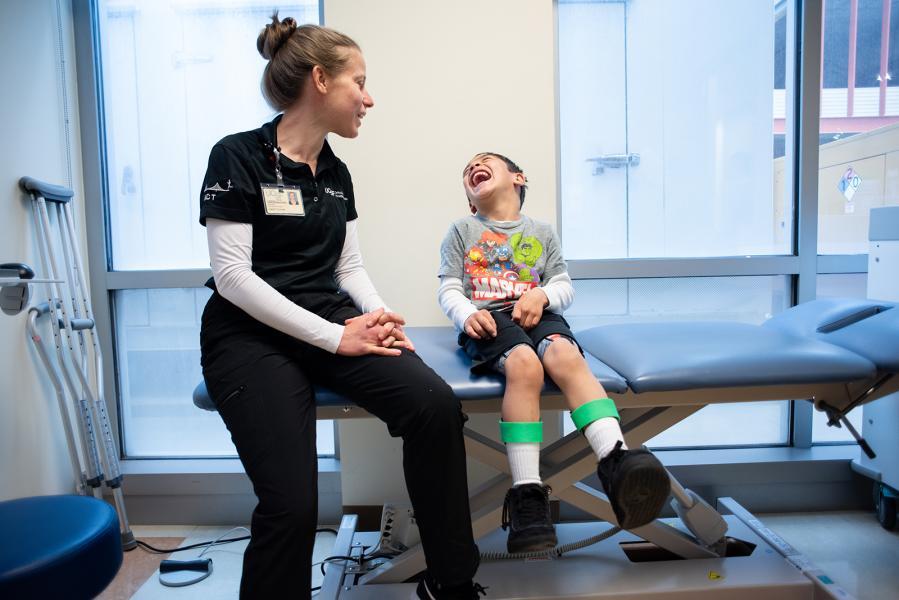
Women Are Essential in Pediatric and Rehabilitation Care
Children, especially girls, often respond differently depending on who provides care.
In pediatric O&P, trust and communication are critical, and female clinicians frequently play an important role in:
- Pediatric seating and positioning
- Cerebral palsy orthotics
- Clubfoot and developmental conditions
- Scoliosis brace management
- Assistive technology provision
Research in healthcare more broadly shows that women make up around 70% of the global health workforce, yet remain under-represented in technical and leadership roles.
In rehabilitation fields, increasing female participation has been linked to improved patient communication, more inclusive care, and better long-term outcomes.
The IMEA Challenge: Training and Opportunity
Across IMEA, the shortage of prosthetists and orthotists is already severe. In many countries there are only a few trained clinicians for millions of people, and the number of women in the profession is even smaller.
To address this gap, the profession needs to:
- Encourage more women to study O&P
- Provide scholarships and training opportunities
- Support safe and inclusive workplaces
- Promote female leadership in rehabilitation
- Develop training programs accessible to women in all regions
Universities, NGOs, and professional bodies all have a role to play in ensuring that the next generation of CPOs includes more women.
Not Just Equality — Better Care
International Women’s Day reminds us that diversity in healthcare is not optional.
In Orthotics & Prosthetics, having women in the profession means:
- Better access to care for female patients
- Better communication with children and families
- Stronger rehabilitation teams
- More culturally appropriate services
- A more sustainable workforce for the future
The goal is not simply to have more women in O&P.
The goal is to build teams that reflect the patients we serve — across every country in IMEA and beyond.