 By
By
Saudi Arabia’s newly released NUPCO Custom-Made Orthotic and Prosthetic services tender is more than a procurement event. It is an important market signal for the Kingdom’s orthotics and prosthetics sector, and for the wider rehabilitation and long-term care ecosystem now being reshaped by health sector transformation and privatisation.
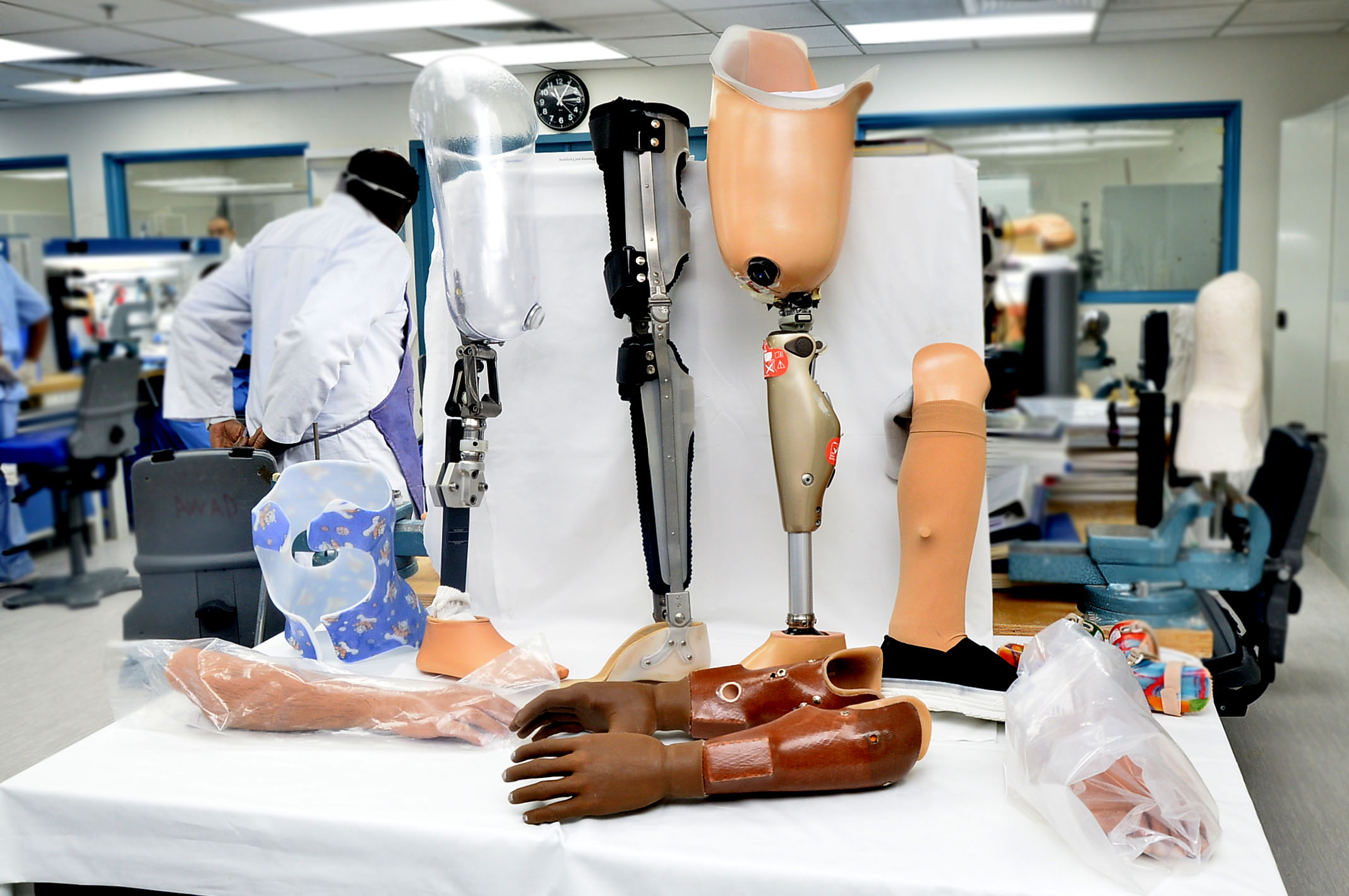
The tender item list makes clear that this is not a narrow component purchase. It covers a broad mix of custom-made orthotic and prosthetic services, including lymphedema compression garments, custom transfemoral prostheses, transtibial prostheses, articulated AFOs, supra-malleolar orthoses and other patient-specific rehabilitation products. The list also includes service-oriented descriptions rather than simple commodity supply language, reinforcing that Saudi procurement is increasingly focused on delivered clinical solutions, fitting, fabrication and patient-specific provision.
That matters because Saudi Arabia is no longer moving only toward procurement reform. It is moving toward a broader model in which the private sector plays a larger role in delivering healthcare services. Official Saudi investment material states that the Kingdom aims to increase the private sector’s contribution to the healthcare market from 25% to 35% by 2030 through privatizations, PPPs and other incentives. The National Center for Privatization & PPP has also said the new National Privatization Strategy targets more than 220 PPP contracts by 2030 and over $64 billion in private-sector capital investment.
For the O&P market, NPT0003/26 suggests that Saudi Arabia increasingly sees orthotics and prosthetics not as an isolated workshop activity, but as part of a broader care pathway connected to rehabilitation hospitals, long-stay services, home care and health clusters. That interpretation is supported by the Ministry of Health’s earlier PPP activity. In 2023, the MOH and National Center for Privatization launched projects for long-stay hospitals, medical rehabilitation hospitals and home care, and reported 424 expressions of interest from 200 companies in 21 countries. The rehabilitation project alone included plans for 150-bed medical rehabilitation hospitals and 120,000 outpatient treatment sessions for each health cluster involved.
In practical terms, this could reshape the Saudi O&P market in five ways.
First, it is likely to accelerate the shift from product sales to managed service delivery. Providers that can combine assessment, measurement, fabrication, fitting, follow-up and documentation will be better positioned than companies focused only on selling components. The wording in the tender repeatedly refers to custom-made, patient-specific service packages, which aligns with that direction.
Second, it should strengthen demand for regional provider networks and multi-site delivery capability. As Saudi healthcare is reorganised through health clusters and service transformation, O&P providers will increasingly need to support hospital systems, rehabilitation centres and long-term care networks across multiple locations rather than serving a single institution. Saudi official material describes the health transformation model as one built around clusters and a separation between regulator, payer and provider functions.
Third, the tender environment will favour companies that can demonstrate clinical governance, standardisation and compliance. In a privatising health system, private operators are usually expected to deliver measurable service levels, consistency and auditable outcomes. That raises the bar for O&P documentation, turnaround times, certified staffing, traceability of components, infection control, and follow-up protocols. This is an inference from the Kingdom’s PPP direction and the structure of recent health privatization projects, rather than a tender clause stated verbatim.
Fourth, it may create stronger momentum for digital workflows in O&P. As procurement becomes more structured and larger service platforms emerge, there is a stronger business case for digital scanning, CAD/CAM, workflow tracking and distributed fabrication. These tools support standardisation across sites, improve reproducibility and help operators manage volumes more efficiently. This point is also an informed market inference based on how large-scale contracted service models typically evolve; the NUPCO item list itself confirms the shift toward organized custom service delivery, not just inventory buying.
Fifth, the long-term opportunity extends well beyond prosthetics alone. Saudi Arabia’s long-stay, rehabilitation and home-care pipeline means orthoses, compression, seating-related interfaces, post-operative bracing and mobility-enabling devices could all become part of larger integrated contracts. In other words, the addressable market is not just amputee care. It is the broader rehabilitation continuum.
There is also an important competitive implication. NUPCO’s earlier Prosthetics Orthosis Supplies tender result shows that Saudi procurement in this category is already active and structured. The arrival of NPT0003/26 indicates continued institutionalisation of the segment, but with a stronger custom-service framing. That should attract not only component suppliers, but also clinical service providers, integrated rehab operators, international O&P groups, and technology-enabled delivery models.
For long-term care operators, this is especially significant. A larger LTC and rehab build-out inevitably increases the need for contract O&P support, pressure management, mobility restoration, post-acute orthotic intervention and chronic-condition management. In many markets, these services remain fragmented. Saudi Arabia’s privatisation pathway could instead pull them into more formal provider ecosystems tied to clusters, PPPs and performance-led contracts.
The opportunity, however, comes with risk. A recent WHO Eastern Mediterranean Health Journal article notes that healthcare privatisation in Saudi Arabia is still in its early stages, and that integrating private providers into the public health infrastructure brings institutional and contractual challenges. For O&P and rehabilitation businesses, that means market growth is real, but success will depend on navigating procurement complexity, reimbursement structures, workforce requirements and service-level expectations.
The bigger conclusion is clear: NUPCOs Custom O&P tender is not just another tender. It is a marker of where Saudi Arabia’s rehabilitation economy is heading. As the Kingdom expands private participation, builds cluster-based delivery models and advances long-term care and rehabilitation PPPs, orthotics and prosthetics will become more strategically important, more systematised and more closely linked to the broader continuum of care. For suppliers, clinics, rehab operators and digital fabrication partners, the Saudi market is moving toward scale, structure and integration. Those prepared for that shift are likely to benefit most.