 By
By
Robotic prosthetics are entering a new era. Advances in surgery, neural interfaces and machine learning are allowing prosthetic limbs to function more like natural arms and legs.
Researchers are now focusing on restoring both movement and sensation, bringing prosthetic technology closer to becoming a true extension of the human body rather than a simple mechanical tool.
From Mechanical Tools to Biological Interfaces
Traditional prosthetic limbs relied on cables, switches or basic muscle signals for control. While these systems improved mobility, they often lacked precision and natural feedback.
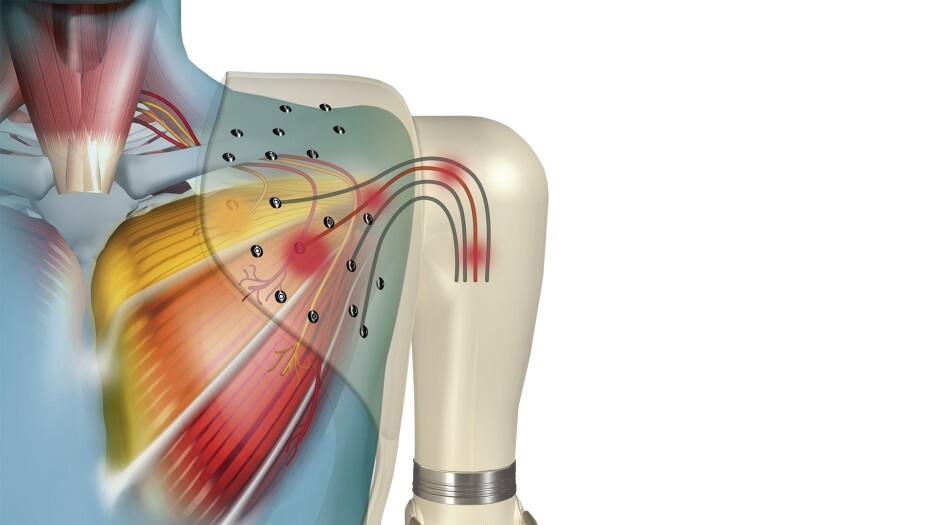
Modern research focuses on treating the residual limb as a biological interface. The goal is to capture signals from the nervous system and translate them into prosthetic movement while sending sensory information back to the brain.
This approach allows users to control prosthetic devices more intuitively, sometimes simply by thinking about the intended movement.
New Surgical Techniques Enable Better Prosthetic Control
One of the biggest challenges in prosthetic control occurs after amputation. When nerves are severed, signals from the brain no longer reach the missing limb, often causing phantom sensations or pain.
To address this problem, surgeons have developed several innovative procedures.
Targeted Muscle Reinnervation (TMR) reroutes severed nerves to nearby muscles. These muscles act as biological signal amplifiers, producing electrical signals that sensors can detect and convert into prosthetic movement.
Regenerative Peripheral Nerve Interface (RPNI) uses small muscle grafts to stabilize nerve endings. This method improves signal quality while also reducing painful neuromas that can develop after amputation.
Another emerging technique, the Agonist–Antagonist Myoneural Interface (AMI), reconnects pairs of muscles that normally work together in the body. This restores a feedback loop that allows users to sense limb movement more naturally.
Machine Learning Helps Decode Human Intent
Once neural signals are captured, they must be translated into motion. This is where machine learning plays a critical role.
Modern prosthetic systems use advanced algorithms to interpret electrical signals from muscles and nerves. These algorithms filter noisy biological signals and convert them into smooth, coordinated movements.
Some systems use continuous estimation models that allow prosthetic joints to move with variable speed and force, creating more natural motion during daily activities.
Restoring the Sense of Touch
Another major focus of research is restoring sensory feedback.
Scientists are experimenting with techniques that stimulate the brain’s somatosensory cortex. This allows prosthetic users to feel sensations such as pressure, texture and resistance when interacting with objects.
Providing sensory feedback can significantly improve control and confidence when performing delicate tasks like holding fragile items or adjusting grip strength.
The Evolution of Bionic Limbs
Modern robotic prosthetics combine multiple technologies, including:
- advanced sensors that detect muscle signals
- AI-based control systems
- robotic joints and actuators
- neural interfaces that connect with the nervous system
These innovations represent a major step forward from earlier generations of prosthetic limbs, which often had limited movement or required manual control.
Toward Prosthetics That Feel Like Part of the Body
Researchers believe the future of prosthetics lies in deeper integration between biology and technology.
Some experimental systems are exploring direct skeletal attachments or implants that connect prosthetic devices to muscles and bones. These approaches may improve stability, comfort and control compared with traditional socket-based prostheses.
As surgical techniques and neural interfaces continue to advance, prosthetic limbs may increasingly function as part of the body’s natural movement system.
A New Chapter in Rehabilitation Technology
The convergence of robotics, neuroscience and artificial intelligence is redefining what prosthetic technology can achieve.
For clinicians and researchers, the goal is no longer simply replacing a missing limb. Instead, the aim is to rebuild the communication loop between the brain and the body.
If these technologies continue to mature, the next generation of prosthetic limbs could restore mobility, sensation and independence in ways that were once considered impossible.